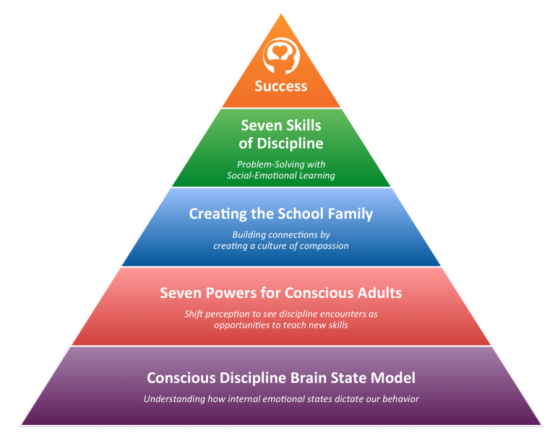
Conscious discipline is one of the many classroom management programs available for teachers to implement in their classrooms. This approach integrates all five domains of learning: social, emotional, physical, cultural, and cognitive. There are five different levels to this process: Conscious Discipline Brain State Mode, Seven Powers for Conscious Adults, Creating the School Family, Seven Skills of Discipline, and Success.
I feel that this practice can be very effective if used correctly and in its entirety. One of my favorite parts of this method is including a safe place in your classroom for students to go if they are having a problem with their emotions and need a moment to collect their thoughts. Safe places could include a beanbag chair, pillows, mirrors, posters about emotions, and stuffed animals. The main point of this area is for the student to feel safe and learn to understand their emotions and how they can effect their actions and others.
The following video provides information on conscious discipline and its benefits in the classroom.
Whole brain teaching is designed for students from kindergarten all the way through college. The basis of whole brain teaching is mimicry and student engagement. Students who participate in whole brain teaching are constantly engaged in learning. I feel that this method would be absolutely mentally and physically exhausting. The students are required to repeat and mimic the actions of the teacher while following very specific procedures and instructions.
Chris Biffle is the founder of whole brain teaching. His goal was to empower teachers and students all over the world to take ownership of their learning and learn to be detail oriented when completing tasks. There are many mixed reviews on whether this method is effective or not. I believe that it depends on the students you have. I use bits and pieces of this method in my kindergarten placement, my favorite being the class - yes call. The following picture presents the main rules for a classroom that implements whole brain teaching.
The following video shows Chris Biffle implementing examples of whole brain teaching.
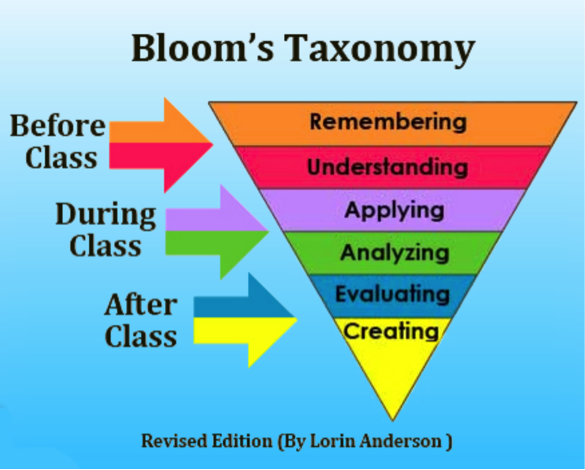
The flipped classroom model is an instructional method that uses technology such as a podcast or a video as instructional materials. In this model, the students are required to watch or listen to videos, read articles or excerpts from online websites, interact with online activities, and engage in critical thinking activities. The teacher provides materials for the students to use in order to find the content and information they need to learn to meet a certain objective. The teacher is only there to facilitate the learning while the students are tasked with providing their own learning.
I personally feel that this works better in the upper grade levels. This is definitely more of a hands-off approach to teaching. The teacher is responsible for providing resources such as videos, podcasts, and websites for students to use to find information. The students are responsible for demonstrating their learning through blogging, presentations, discussion boards, and reflective videos or podcasts.
This model is great for allowing students to learn at their own pace. It allows students to take their time on the topics that they do not completely comprehend. If a student misses a day, they can catch up easily because all of the materials are online and available to the students not only at school but at home as well. I feel that this model could be very beneficial in promoting students to become independent and take ownership of their learning.
The following video provides information on the benefits of the flipped classroom model.
Social and emotional learning is key to providing students with the skills to be successful in not only school but life as well. Teaching students about social and emotional learning allows them to develop self-awareness, self-management, social awareness, relationship skills, and responsible decision-making. Allowing the students to make connections from emotions to actions can be very beneficial in promoting student growth and development.
I personally feel that this is crucial in the lower grades. Providing students with a firm foundation of social and emotional learning will allow the students to collaborate efficiently and engage in discourse successfully. Speaking from personal experience, I believe that it is important to take the time to talk to students about the emotions they are feeling and how their emotions can affect not only their actions but also the people around them.
I mostly recently have been working in a kindergarten classroom, and I see social and emotional learning every day multiple times a day. My kindergarteners are still learning self-awareness, and I have see first-hand how beneficial taking the time to engage in discussions about emotions and how they can affect others can be.
The following video provides information on social and emotional learning.
Student led conferences are just like parent-teacher conferences, but the main difference is that the student takes the lead. The student becomes responsible for informing their parents or guardians where they are academically in school and what they have been working on. Many of the activities completed in classrooms these days are online. One way to keep a record of this form of student work would be with a digital student portfolio. This is simply a specific place where students can access their digital activities that they completed online during school.
Throughout my experience with practicum and internship at Jacksonville State, many of my placements have utilized platforms such as Google Classroom, Nearpod, and Seesaw. My favorite platform that I have seen so far is Seesaw. This app allows teachers to create a digital portfolio for each student in their classroom. Throughout the year, students can upload pictures, activities, and more onto their Seesaw, and it is automatically added to their portfolio where their parents and guardians can view it, like it, and even leave a comment on it. I feel that this is an amazing platform to use because it allows parents to get involved in their student's learning.
The following video provides information on student led conferences and digital portfolios.
What could possibly more exciting than field trips and technology? If you said smashing them together to create something totally new, you're absolutely correct! Virtual field trips are all the rage with classroom teachers these days. It is a safe and easy way to take your students to places you could never go before such as the moon, Egypt, and even back in time!
Imagine how much stress you endure while taking your students on real life field trips. Are they truly receiving all the information you want them to gather from the experience? Virtual field trips give teachers the power to narrow down exactly what they want their students to know from visiting certain locations. With an endless amount of resources, taking your students on virtual field trips can be as simple as googling the destination.
My favorite method of conducting virtual field trips is through the Nearpod app. It is very user friendly, and it allows you to incorporate virtual field trips right into your lesson presentations. During one of my practicum placements at Jacksonville State, I had the opportunity to take my students on a virtual field trip to the Capitol Building in Washington, D.C. The students were very intrigued with this feature, and they were eager to explore the location we had talked about previously in the lesson. This allowed the students to make a connection from learning about the branches of government to seeing where it is actually located in the world. I feel that this tool makes learning translate into real life. The following picture shows where the virtual field trip tool is on the Nearpod app.
The following video provides information on how virtual field trips can be beneficial in a classroom.
STEAM is an acronym for science, technology, engineering, art, and math. It is an interdisciplinary approach to learning that allows students to develop their problem solving, discourse, and critical thinking skills. STEAM activities are mostly presented in the form of a problem. Students are encouraged to brainstorm possible solutions and collaborate as a team in order to reach a certain goal. The entire point of STEAM is to empower students to become the problem solvers and allow them to express themselves throughout all of the disciplines.
The main difference between STEAM and STEM (science, technology, engineering, and math) is the art aspect of the activity. STEM lessons naturally include art because the students are expressing themselves through how the portray their solutions to the problems presented to them through STEAM. In my opinion, engineers are artists because they are using their abilities to create works just as artists do.
Students are inherently curious. They have many wonders and each see the world in their own unique way. I feel that it is crucial to provide numerous opportunities for them to develop their problem solving skills through STEAM activities. I have led many STEAM activities throughout my academic journey at Jacksonville State, and I can attest to the fact that students absolutely love being able to imagine, create, and test their inventions in order to solve real world problems.
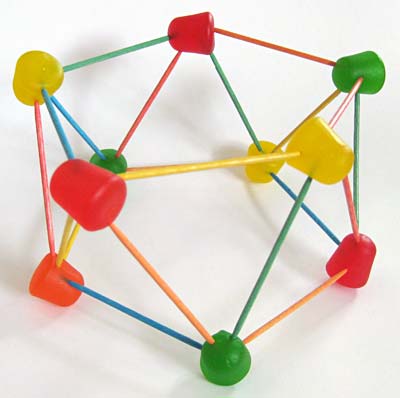
One activity that I implemented in a fourth grade practicum setting was about how we could invent and engineer structures that could withstand the elements of a tornado. After narrowly surviving a tornado, this subject is very close to my heart. We used gumdrops and toothpicks to engineer structures such as the one below to see if they could withstand the elements of a tornado. I feel that providing tasks such as this to students could benefit the future of the world because they are the ones who will go on to find solutions and cures. Why not teach them to become problem solvers at an early age?
The following video provides information on what STEAM is and why it is important to implement in todays classrooms.
Technology has become fundamental in schools. We are constantly surrounded by it in our every day lives. It is very important that students learn how to properly use technology because it will prepare them for jobs that have not even been created yet. The power of technology has advanced exponentially within the past decade. Students these days have the opportunity to learn more about technology and how it works through coding and robotics.
I have personal experience on this topic because I distinctly remember participating on my middle school's robotics team. We had the opportunity to work with LEGO Robotics kits like the one shown in the picture below. We participated in challenges that required us to create different series of code in order to program our robots to perform various tasks. I had a fantastic robotics teacher that encouraged us to persevere until our code worked and our robots could complete their given tasks.
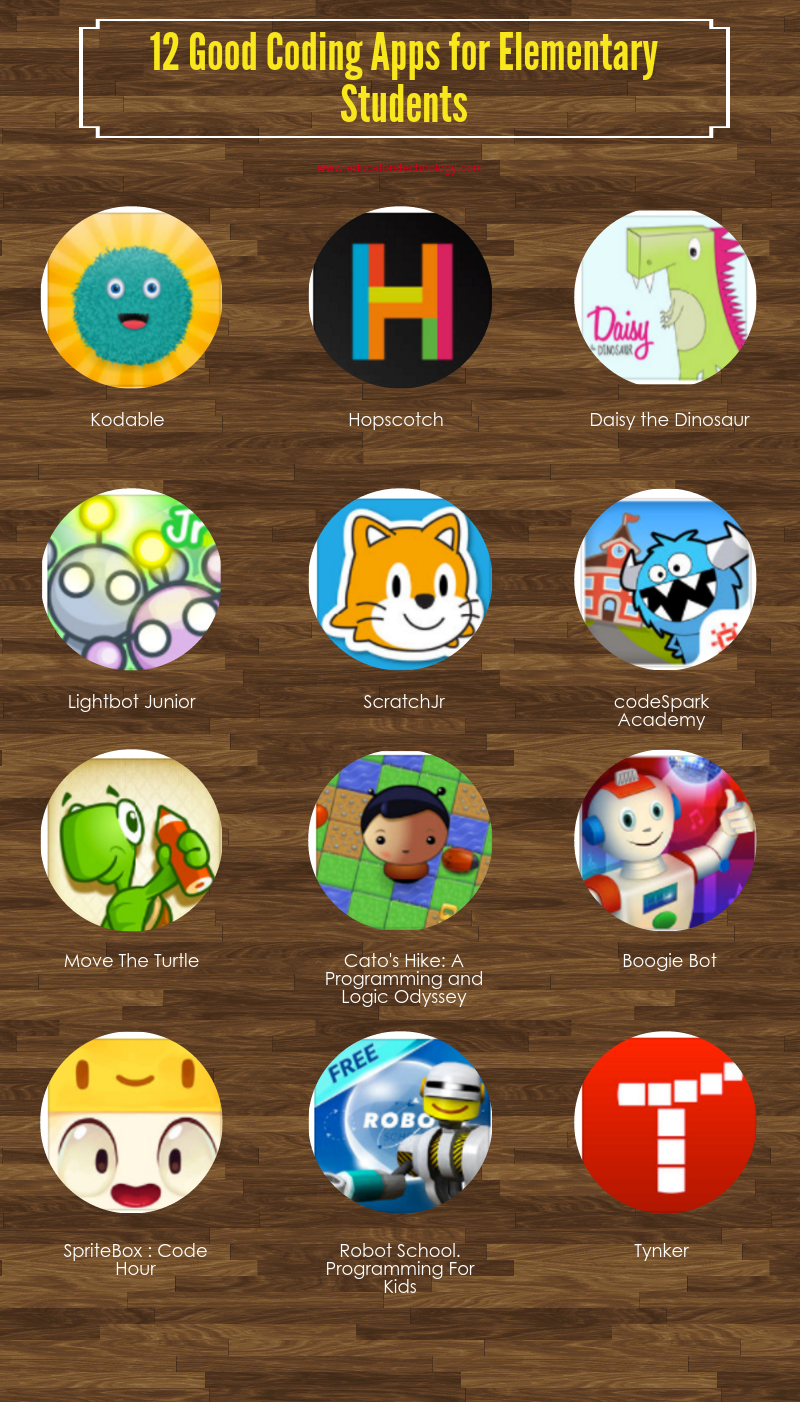
As teachers, we must acknowledge the value of technology, coding, and robotics. Technology will continue to develop as the years go by, and we must provide the opportunity for our students to explore and gain interest in these areas. The following picture provides twelve apps that you could implement in your classroom to help your students begin to learn the language of coding.
The following video provides information on why coding is important and how it can impact not only students, but the entire world. Although it was made in 2017, I feel that this is still, if not more, relevant today.
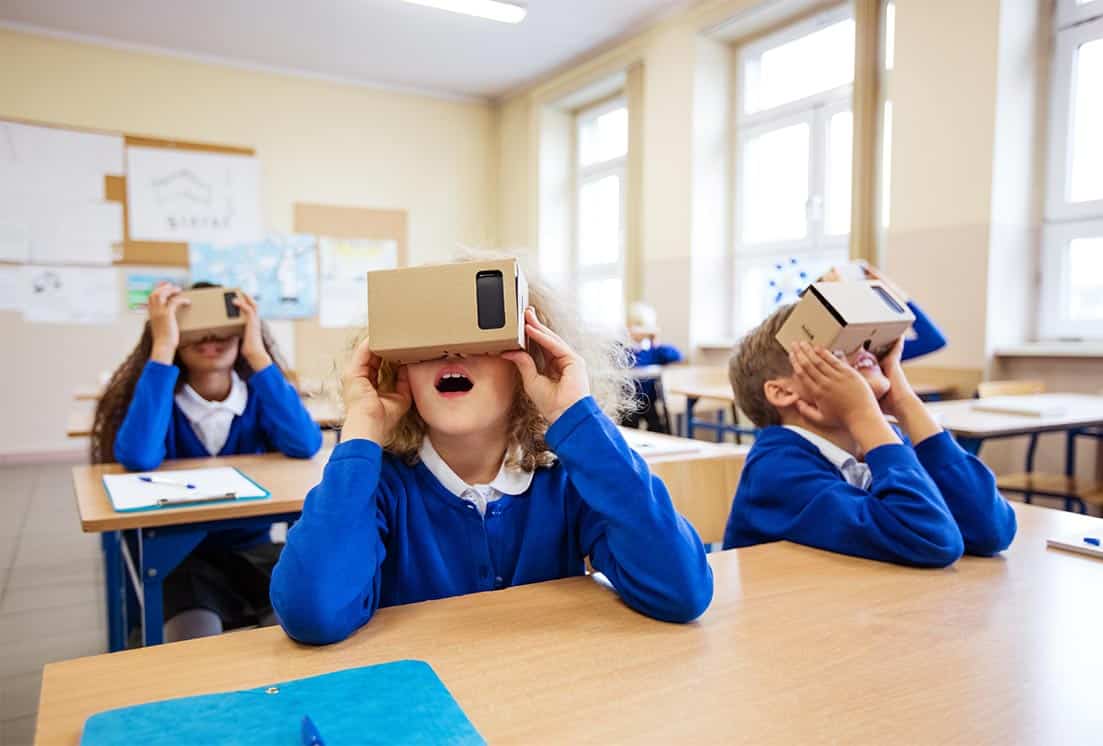
Nearpod is an application that can be utilized in the classroom. The price of Nearpod is $349 a year or $29 a month. It is a platform that allows teachers to deliver lessons, implement activities, and even provide assessments to students. This application is pre-loaded with over seven thousand ready-to-run, customizable lessons that teachers can access on any device. These lessons span over all of the subjects including science, English language arts, math, social studies, and even digital citizenship. This application also supports the use of virtual reality headsets. The virtual reality feature allows students to go on virtual field trips to places all over the world. This allows teachers to make the learning personal to the students and apply content beyond the four walls of the classroom.
The following video provides information on Nearpod and its various features.
I had the opportunity to use this application to implement my lessons in a fourth grade social studies classroom at Donehoo Elementary in Gadsden, Alabama. I used the quiz feature to assess student learning before, during, and after the lesson. I also took the students on a virtual field trip to the United States Capitol building. The students had a blast learning about the branches of government and how congress passes legislation. I personally feel that this is an amazing platform that can transform any classroom into a twenty-first century learning environment. Upon further research, I learned that they have added more features to this application, one of which allows students to view three dimensional objects such as dinosaurs. If I can manage to find the money to purchase this application, I would love to implement it in my future classroom. I believe that the features it possesses could be extremely beneficial in improving student engagement and comprehension.
The following pictures display all of the various features and tools that Nearpod has to offer.
Digital literacy is the ability to use information and communication technologies to find, evaluate, create, and communicate information, requiring both cognitive and technical skills. Digital literacy is one of the key pillars of digital citizenship. There are many methods and strategies that can be utilized to implement digital literacy in your classroom. One method of implementing them in the classroom would be through podcasting. A podcast is a digital audio file that made available on the Internet for downloading to a computer or mobile device, typically available as a series, new installments of which can be received by subscribers automatically. In other words, podcasts are a lot like talk radio but on demand. Podcasting is a free and easy way to provide students a gateway to digital literacy. It can be as simple as recording instructions for an assignment or as complex as guiding your students through an advance concept.
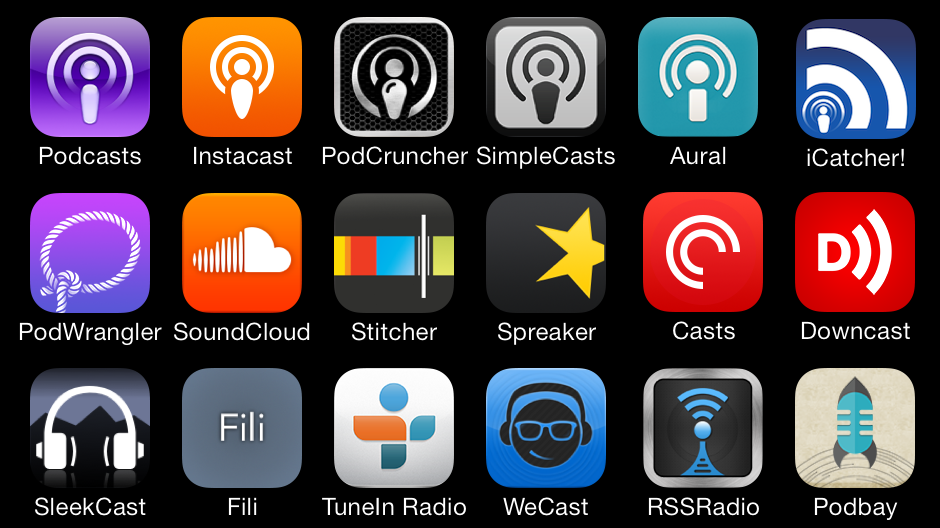
The following picture provides examples of various podcasting applications available on the market that can be used to implement podcasts in the classroom.
The following video is called "Podcasting for Teachers: How-to Make & Use Podcasts as an Educational Tool". It provides various resources and methods for implementing podcasts.
I feel that podcasting can be very beneficial in furthering student learning, differentiating learning in order to fit the various need of the students, and allowing the students to learn through the implementation of technology. The world today is heavily dependent on technology, and students must be proficient in utilizing it. I personally feel that too much technology in the classroom can hinder student growth. It is crucial to know your students and how they learn in order to ensure their needs are met. In the future, I hope to implement podcasting in my classroom through various methods such as providing guided practice in order to support students with various needs, guiding students through various activities, supplementing a video or lesson that you have already taught, reviewing and studying tool, and prompting students to demonstrate their learning by allowing them to create their own podcasts.
Everyone knows about the three
little pigs, but has anyone ever wondered what really happened? This story follows
Alexander T. Wolf as he tells his side of the story of the three little pigs.
Alexander wants to set the record straight and clear his name. What do you
think Mr. Wolf will say about what really happened to their houses?
The illustrations in this book
remind me of a newspaper. Many of the fonts are headlines like those from a newspaper.
They seem to be sketches and watercolors.
A lesson idea for this book could
be second grade writing. I would ask the students to choose between the pig’s
story or the wolf’s story and debate about why they believe it. I would have the
students write a paragraph about their stance and then have them debate it in
class.